
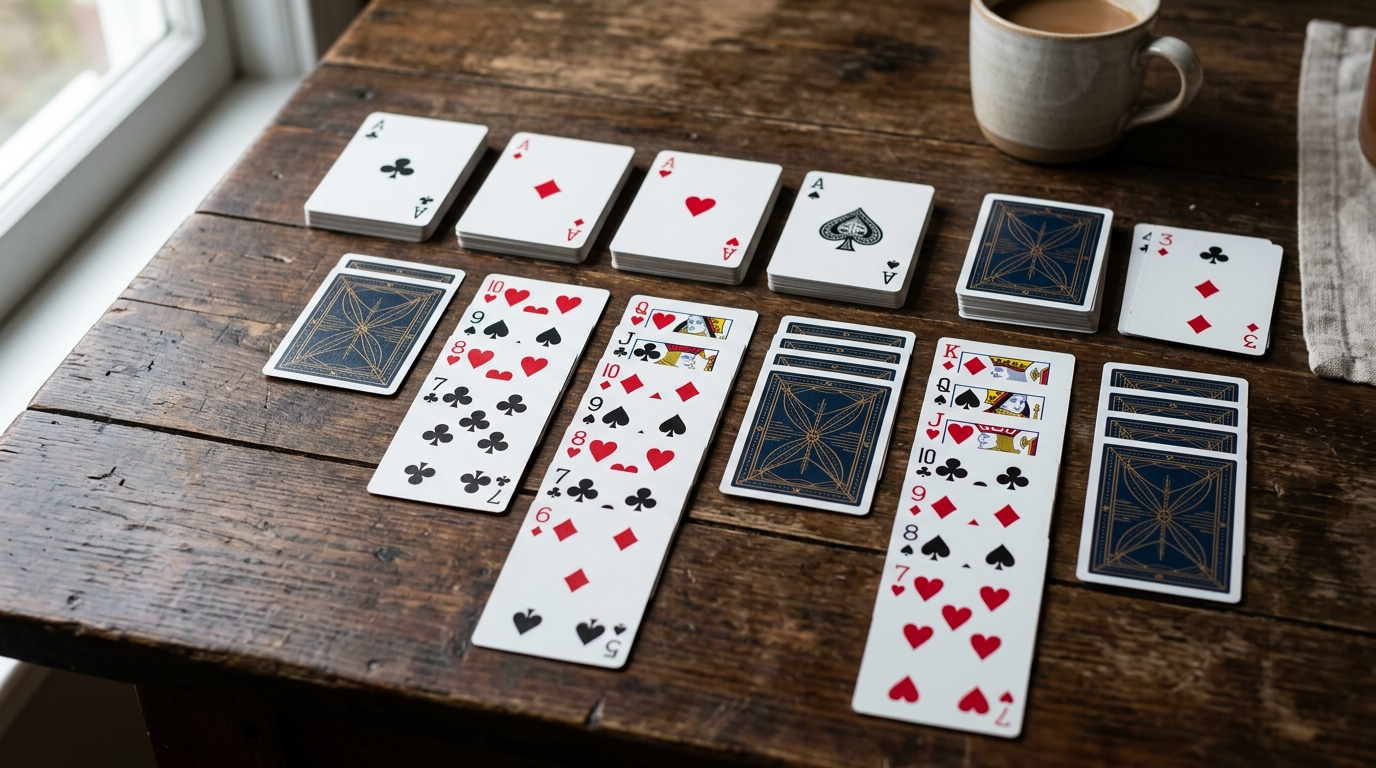
3 Card Solitaire becomes easier to enjoy once the rules are treated as information rather than obstacles. Draw-three is less about speed than about remembering which useful card is temporarily buried under the waste pile. The goal is not to memorize every advanced trick. It is to understand what a legal move reveals, what it closes, and when a tempting shortcut creates a harder board. A few plain habits can make the next session feel more readable without taking away the discovery.
3 Card Solitaire in practice
Draw-three changes the value of patience
In three-card Solitaire, the waste pile is not just a place where unusable cards wait. It is a small memory problem. The visible card may be blocked by the one beneath it, and a decision that seems harmless can change when that hidden card becomes reachable. The rule of alternating colors and descending ranks remains, but the order of access becomes part of the puzzle.
That is why a legal move is not automatically a good move. Before sending a card to the tableau or foundation, ask whether it reveals a face-down card, opens a column, or changes the next useful card in the waste pile. A quiet move can be stronger than a flashy one.
The tableau still comes first
A common mistake is to play every available foundation move immediately. Sometimes that is correct, but the tableau often contains the more valuable information. Exposing a hidden card or creating a useful empty column can unlock several future moves. The foundation is safe storage; the tableau is where the board changes.
Use the stock deliberately. In draw-three, remember the card below a useful waste card when possible. You do not need perfect memory. You need enough memory to avoid burying the same opportunity repeatedly.
Practice the rule through short sessions
Open a Solitaire game on the main site and search this site for more Solitaire tips. Microsoft’s Solitaire history shows why the game became familiar, and Britannica is a useful reference for the wider patience family.
A clean checklist for the next game
Before moving a card, read the tableau as a set of future spaces. A face-down card that can be exposed, a column that can be emptied, or a sequence that can receive several ranks is usually more valuable than a move that only makes the layout look tidy. The best legal move is often the one that leaves the most useful next move.
Keep the waste pile and foundations in view. In draw-three play, remember which useful card sits below the visible one when possible. In every mode, check whether sending a low card home removes a color or rank needed in the tableau. A foundation is safe storage, but the tableau is where the board changes.
When a deal fails, review the first decision that closed a lane or buried a useful card. Do not only replay the final few moves. The late problem is often the result of an early convenience move that looked harmless at the time. A short review makes the next deal feel less like luck and more like a sequence you can read.
For a calm daily test, start a Solitaire game on Easy Daily Puzzle and browse more Solitaire tips on this site. Set one goal for the session: expose more hidden cards, preserve a column, or delay one foundation move. A narrow goal keeps the game useful without turning it into a chore.
The small detail worth remembering
The most useful Solitaire habit is to separate movement from progress. A card can move without improving the position. Look for reveals, usable spaces, and sequences that keep options open. That simple filter makes familiar deals feel more deliberate.
A daily card game does not need a perfect win rate to be worthwhile. If the board helps you notice timing, order, and the cost of a convenient move, the session has already given you something to use on the next deal.
When in doubt, prefer the move that keeps more cards available. A tidy foundation is satisfying, but an open tableau usually gives the next decision more room.
For a little more context, read Microsoft Solitaire history and Patience card game overview. These references are useful for checking the basic history or rules without turning a daily game post into a long reference list.