
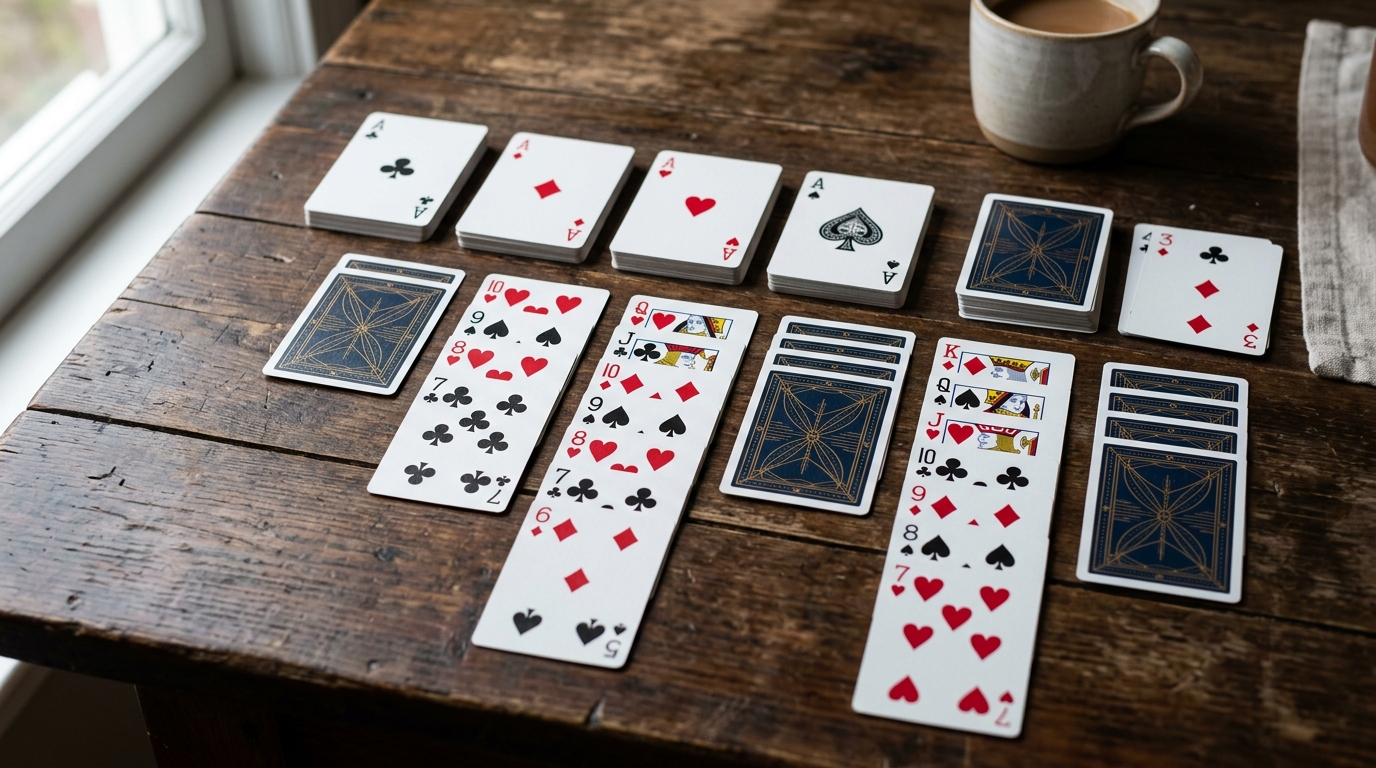
Draw three solitaire looks familiar to anyone who has played basic Klondike, but the tempo changes quickly once you only see every third card from the stock. That extra layer is why small mistakes start multiplying on 3 Card Solitaire much faster than many players expect.
Why draw three feels tighter
You cannot treat every exposed card as equally reachable. Timing matters more, and waste-pile order starts shaping the whole board.
The mistake many players repeat
A lot of players move a legal card immediately without asking whether it frees something more important. In draw three, that can cost several passes through the stock.
Why patience matters here
The base structure described in Bicycle's Solitaire rules is still the foundation, but draw-three play rewards waiting for a cleaner sequence instead of chasing every possible move.
A better draw-three habit
Watch the waste pile as closely as the tableau. In many games, the next useful move is really about card order, not about the first legal action you see.
- Play on 3 Card Solitaire
- Find more solitaire posts on 3 Card Solitaire
- Read Bicycle’s Solitaire guide
- Read David Parlett’s history of patience games
Draw three solitaire gets friendlier when you start treating timing as part of the puzzle. The waste pile is not background clutter. It is where a lot of the game really lives.